The Last Three Things AI Can't Copy

"AI hasn't made human judgment obsolete. It has made it the only thing that still matters."
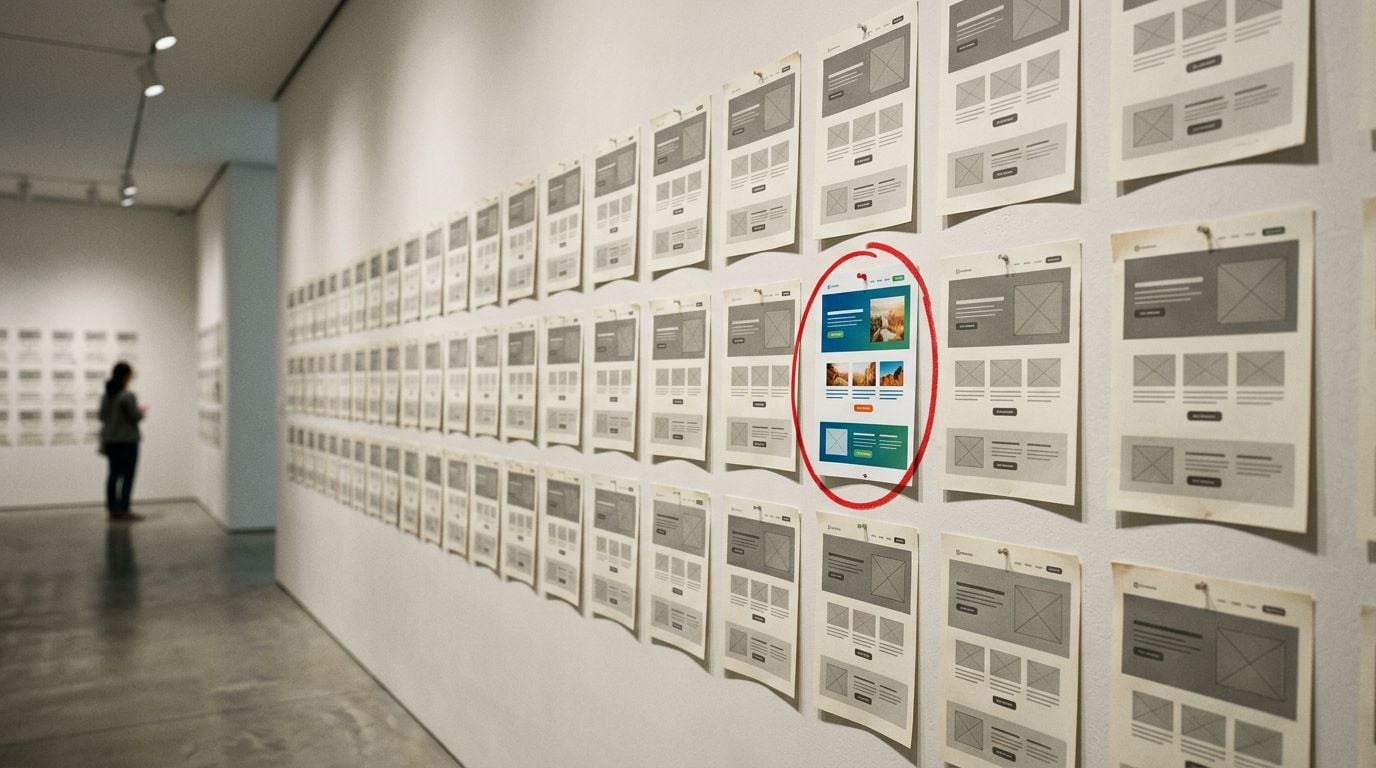
Last week our design team reviewed thirty AI-generated landing pages. All thirty looked good. We spent two hours arguing about which one was right.
In the end, we picked one. It wasn't the most polished. It just felt like Genspark. I couldn't have told you ahead of time why. But the moment I saw it, something in the room shifted, and we all knew.
It wasn't the landing page that mattered. It was the act of choosing.
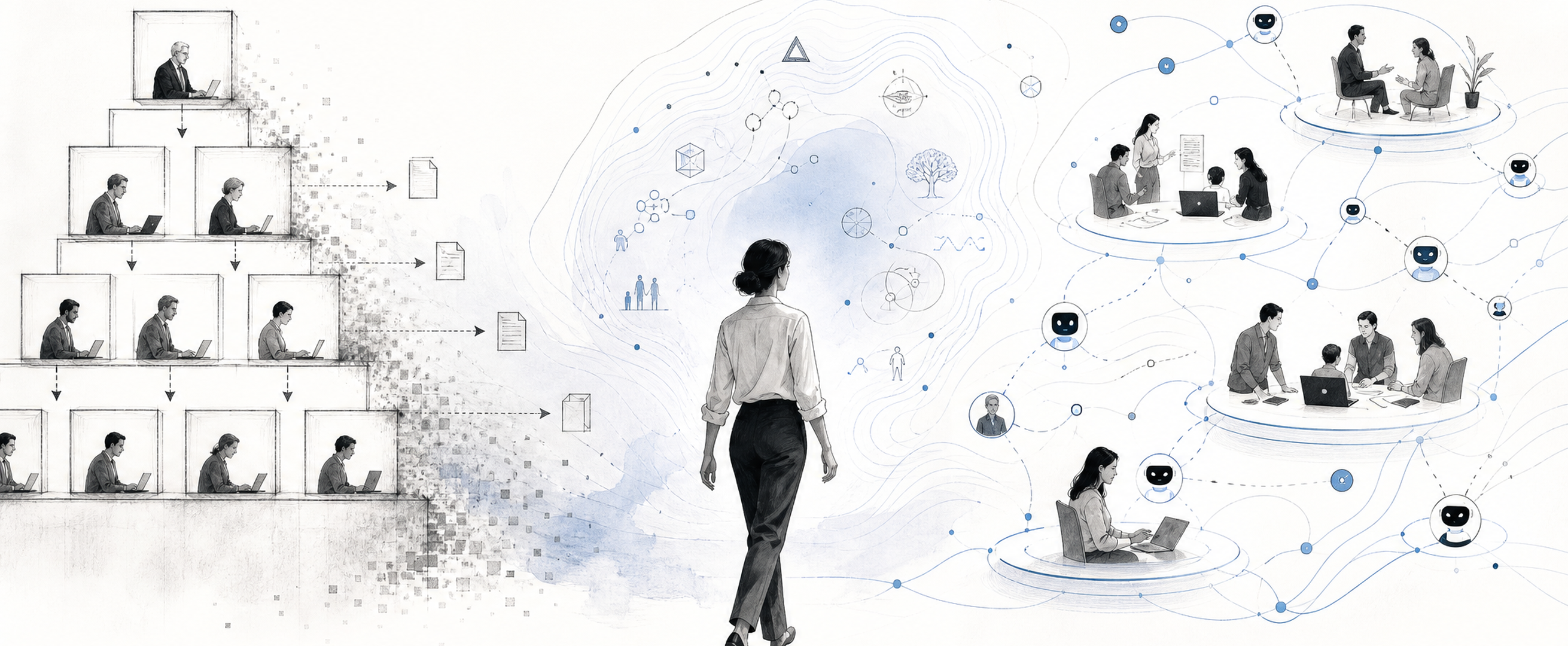
In my previous eight Seeing AGI articles, I've written about AGI's arrival, AI-native teams, vibe working, the token divide, and how AI is rewriting the human role inside the org chart. There has been a quiet thread I haven't named. I want to try in this one.
My best guess, today: as AI commoditizes output, the last three things that remain hard to copy are taste, judgment, and trust. Everything else can be generated. Those three resist it.
Output Is Becoming Free
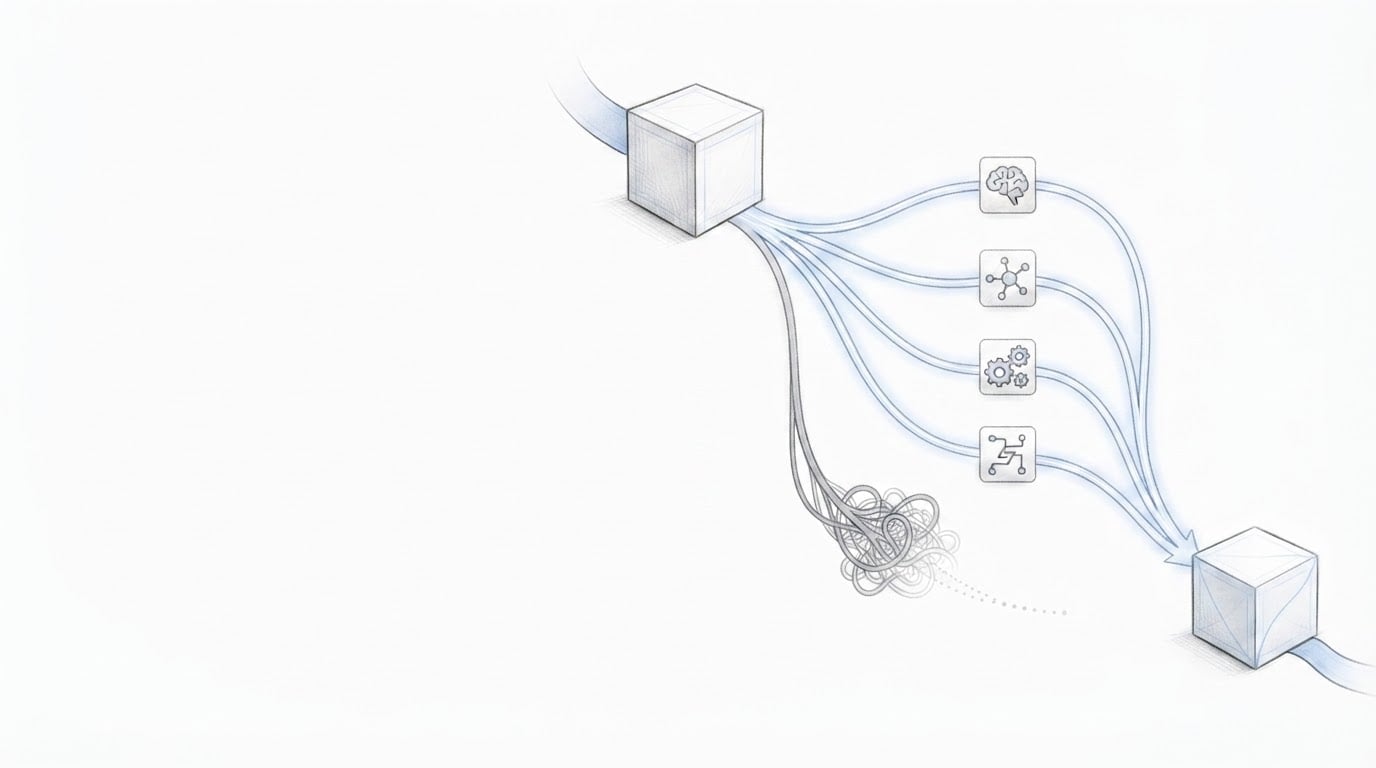
In 2023, a market analysis took two weeks. Today, four minutes. A landing page took a week. Today, before lunch. A clean function took an hour. Today, eleven seconds.
This is not a productivity story. The act of producing something is becoming free — and when production becomes free, value moves somewhere else. It always does. Recorded music moved value from records to artist brands. The printing press moved it from scribes to editors. PowerPoint didn't kill designers; it raised the bar for the best ones.
The question I sit with is no longer "how do I produce faster." It's: when output is free, what is still scarce?
My working answer is three things.
The First One: Taste
I have to be honest before I write a word of this.
There is a strong argument that anyone writing a long essay about taste is, almost by definition, showing they don't have much of it. The people I most admire on this dimension don't talk about taste. They just choose well, over and over, and let the work speak for itself. The moment you start explaining what good looks like, you've usually stopped having it.
I am the student in this section, not the teacher.
With that on the table: when I look at the choices that have aged well in my career — the products that worked, the hires that compounded, the bets that paid off — they were not the optimized ones. They were the ones that felt right to someone who had been looking at the problem long enough to know what right would look like.
AI doesn't change that mechanism. AI changes the volume. The choosing muscle that used to be a small part of the job is becoming most of the job.

Here's the part I find uncomfortable: most of us were trained to produce. I still catch myself, ten minutes into reviewing fifty AI options, typing my own version instead. Not because mine is better — often it isn't — but because producing feels more like work, and choosing feels too quiet, too inactive, too much like I'm not earning my seat.
What I'm trying to do, imperfectly, is invert that habit. Spend less time generating, more time looking. Articulate, in writing, why one thing is better than another — not because I'm sure I'm right, but because articulating is the only way to find out where my instincts are calibrated and where they're not.
That's the whole practice. It's slower than producing. I don't know yet if it's working. I'll find out the same way everyone else will.
What I am fairly sure of: AI hasn't made the choosing muscle obsolete. It has made it the muscle that matters.
The Second One: Judgment
Taste is about choosing the right version of a thing. Judgment is about choosing whether to do the thing at all.
Earlier this year I asked a PM to use AI to generate every reasonable product idea we could pursue in the next six months. He came back with a long list. All defensible. A smaller fraction were genuinely right for who we are.
We picked two.
The hours we spent picking those two were the most important hours I worked that month. Generating feels like work. Saying no feels like nothing — until you look back a year later and realize it was the whole game.

What I find genuinely hard about saying no now is that the noes are louder than they used to be. When generating an option costs almost nothing, every option you don't pick feels like a small betrayal. There's a real version of each one sitting right there in the AI's output, looking reasonable. Choosing two means walking past fifty-five other reasonable choices. That requires more conviction than it used to, not less.
I don't have a clean method. The closest thing I have is something I learned from an older mentor: every week, write down on a single page what you decided not to do, and why. I find this harder than I expected. Some weeks the page is almost empty — and that's the signal. I wasn't really deciding. I was just executing whatever showed up loudest.
The Third One: Trust
Taste shapes which version is right. Judgment shapes what to build. Trust is what makes anyone care that you built it.
In a world where every competitor uses the same models, the question users are asking — usually without phrasing it this way — is whose output do I believe? The question is which person, which brand has earned the right to be listened to.
Trust is the strangest of the three. It doesn't live inside your company. It lives inside other people's heads. You can't generate it. You can't buy it. You can only let it accumulate, slowly, over a time horizon that most companies don't have the patience for.

I'll be honest about why I've been writing this series. Each piece is, among other things, a deposit into a trust account I don't fully control. The account isn't trust in Genspark the product. It's trust in me as someone trying to see clearly in public, willing to be wrong out loud. If my Seeing AGI articles age badly, that account will be empty regardless of what I ship. I find it useful to be clear-eyed about that bargain. It keeps me honest about not writing things I don't actually believe.
What I do feel sure of: in a world of nearly identical AI output, the part of your company that users will eventually anchor on is not what you produced. It's the record of how your decisions held up. Which is just to say: trust, in the AI era, is the long shadow of judgment.
Why I Keep Writing These
A friend asked me recently why I keep writing this series.
The honest answer is that I'm still working it out for myself.
I have a 13-year-old son. I have a company of around 70 people who are betting their careers on my judgment. I'm not writing these pieces because I have it figured out. I'm writing them because the only honest way I know to figure something out is to write it down and let people who are smarter than me tell me where I'm wrong.
Taste, judgment, and trust are my best guesses. There may be others I haven't seen. One of these three may turn out to be less durable than I think. I'll keep writing as I learn. I expect some of what I've written here will look naive in two years. I'd rather be naive in public than confidently silent.
The one thing I do feel quietly sure of: when the machines can do almost everything, the part that still matters is what the humans choose to do with them. Not what we can do. What we choose.
The choosing is the work now.
Eric Jing Still figuring it out, in public

About the author
Eric Jing
Eric Jing is the Co-founder and CEO of Genspark, an AI super agent platform that reached unicorn status in roughly 20 months. A founding member of Microsoft Bing in 2009, Eric brings deep expertise in search technologies and AI development, having built his previous company to a $5.5 billion valuation. Under his leadership, Genspark achieved remarkable growth, reaching $50M ARR in just 5 months.